
By Gary Pienaar, Chief Commissioner

Photo by Nicholas Huisman
In a world where leadership is often measured by titles, authority, social status and achievement, Scouting offers a different perspective. It reminds us that the most impactful leaders are those who inspire, serve, and develop others. For adult volunteers in Scouting, there is perhaps no greater investment in that journey than the Woodbadge training.
Widely regarded as the pinnacle of adult leader development, its true value lies not in the beads worn around the neck or the recognition earned upon completion. Its value is found in the transformation that takes place within leaders and the lasting impact that this has on young people, teams, and communities. Originally designed by Baden-Powell in 1919, the Woodbadge programme provides adult leaders with advanced leadership, management, and interpersonal skills that translate directly into professional, personal, and community success.
At its core, Woodbadge training focuses on leading with purpose, vision, and adaptability. Leaders learn to navigate dynamic, unpredictable environments – an essential capability not only when guiding youth through outdoor challenges, but also when steering teams through difficult situations. It emphasises situational leadership, teaching adults how to assess group dynamics, adapt their communication styles, and support individuals at varying stages of development.
The experience is also designed to encourage self-reflection, personal growth, and a deeper understanding of servant leadership. Through practical application and experiential learning, leaders discover that effective leadership is less about directing people and more about empowering them. This shift in perspective is crucial. Young people do not remember the volunteers who managed programmes. They remember the leaders who believed in them, encouraged them, and helped them discover their own potential.
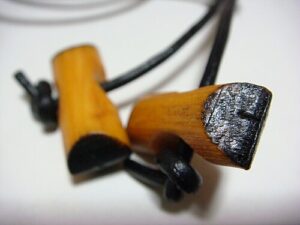
Woodbadge beads ScoutWiki
Today’s volunteers operate in an increasingly complex environment. Adult leaders are expected to manage diverse teams, navigate changing societal dynamics and expectations, support youth well-being, and deliver meaningful experiences. Technical skills alone are no longer enough.
Therefore, at its heart, the Woodbadge is a commitment to something greater than oneself. It encourages volunteers to view leadership through the lens of service. Success is measured not by personal achievement but by the growth and success of others. This philosophy aligns perfectly with the purpose of Scouting: empowering young people to become active citizens and ethical leaders.
The greatest benefit from the Woodbadge training is not what it does for one leader, but rather what that leader subsequently does for others. An inspired and capable leader creates stronger Scout Groups. Stronger Scout Groups deliver better programmes. Better programmes create more meaningful experiences for young people. Those experiences develop confident, responsible citizens who contribute positively to society. This is the multiplier effect of leadership development.
The most effective Woodbadge holders understand that their legacy is not the position they held or the recognition they received. Their legacy is reflected in the lives they influenced. It is found in the stronger leaders they create, the stronger teams those leaders build, and the stronger communities that emerge as a result.
As we gather at Gilwell Reunions around the country this weekend, let us reflect on the true value of our Woodbadge training, encourage new volunteers to start their own leadership journey and renew our personal commitment to lifelong learning and servant leadership.